
RDS 2026 ANNUAL MEETING
November 7th, 2026
Orlando, FL
Day(s)
:
Hour(s)
:
Minute(s)
:
Second(s)
Information for Patients
Understanding The Diseases
The Rheumatologic Dermatology Society focuses on conditions that affect the skin in association with autoimmune and connective tissue diseases. Explore the information below to learn more about these specialty conditions.
Rheumatologic Skin Diseases
If you or someone you care about has been diagnosed with a rheumatologic skin disease, understanding the condition can feel overwhelming. Below you’ll find helpful information about several related conditions and their symptoms.

Dermatomyositis
An autoimmune disease marked by distinctive skin rashes and progressive muscle inflammation and weakness.

Lupus Erythematosus
An autoimmune disease affecting the skin, joints, and internal organs, often causing rashes, fatigue, and widespread inflammation.
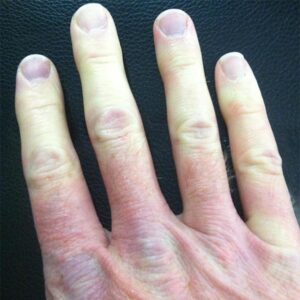
Mixed Connective Tissue Disease
A connective tissue disease with features of multiple autoimmune conditions that can affect the skin, joints, and other organs.

Morphea
A localized autoimmune disease causing patches of hardened, thickened skin due to excess collagen buildup.

Systemic Sclerosis
A chronic autoimmune disease marked by skin thickening and fibrosis that may also involve internal organs.
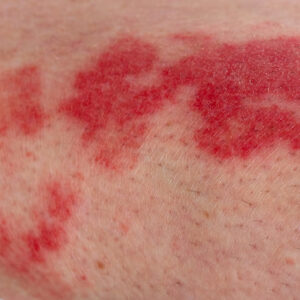
Vasculitis
An autoimmune disease involving inflammation of blood vessels that can reduce blood flow and affect the skin and other organs.
Understanding Autoimmune Disease
Autoimmune diseases occur when the immune system mistakenly attacks healthy tissue, leading to inflammation that can affect the skin and other parts of the body. The information below provides an overview of how these conditions are defined, evaluated, and understood.
What Is an Autoimmune Disease?
Autoimmune diseases occur when the body’s immune system (which normally protects you from infections and cancer) begins to act abnormally and mistakenly attacks normally functioning parts of your body, leading to inflammation of various body tissues and internal organs. We usually classify diseases as “autoimmune” when we can identify specific self tissue that the immune system is reacting against. There are other diseases—such as psoriasis or eczema—which we recognize as stemming from a dysfunctional immune system, but we do not consider them “autoimmune” diseases because we can’t identify specific self tissue the immune system is targeting.
Lab Tests and Diagnosis
Lab tests can be very helpful, but as is true with most tests, they are not infallible. For example, a positive anti-nuclear antibody (ANA) result can be found in completely healthy people, and some people with an autoimmune disease do not have any of the antibodies we normally recognize as being seen in autoimmune disease.
What Causes Autoimmune Diseases?
There is probably no one single cause of most autoimmune diseases. It appears that patients who are at risk for developing an autoimmune disease possess a certain combination of genes that may make them more likely to develop the condition if they are exposed to certain environmental triggers such as infection (a variety of viruses have been suggested to possibly play a role) or ultraviolet radiation from the sun. While autoimmune diseases can sometimes run in families, it is uncommon for one specific autoimmune disease to appear in multiple family members. In rare situations, medications have been associated with the development of an autoimmune disease as have certain supplements and diet aids. Importantly, these are not contagious.